GIF - The hottest ticket in town (if you’re a private credit investor that is) (online-video-cutter.com)

All that glitters is gold

Asset-backed finance and life sciences direct lending are just two branches of growth within private credit, as leading firms such as Oaktree Capital Management look to tap in to a golden period for the asset class; one that has grown to $1.5 trillion. As banks retrench, it is creating dislocation opportunities for savvy investors in shipping, aviation and manufacturing equipment; potentially offering a golden ticket to support transport operators. Unfortunately, there were no chocolate factories available at the time of writing. Lending to life science companies is also an investment theme according to Armen Panossian, who will become Oaktree’s co-CEO in the New Year. As we enter the festive season, private credit investors have plenty to celebrate. The search for the next golden ticket is on!

inspired by Pensions & Investments

Meme - Wise decision trusting you on that latest deal

Trust fund

Lower middle-market GPs are offering co-investments for individual deals to solidify trust with investors. It is not a new tactic but snuggling up to get a closer understanding of how GPs diligence companies and approach deals, is a good litmus test before investing in future funds. Especially in today’s challenging fundraising environment where some managers may feel that securing new investors is like getting blood out of a stone. As Pitchbook reveals, 86% of co-investment deals this year are less than $500 million in size; for managers at the lower end of the market, securing stakes in good companies with established investors is a great way to ‘Come together, right now, over me.’ Investing deal by deal could yet prove to be the ideal path to future fundraising success.

inspired by Pitchbook

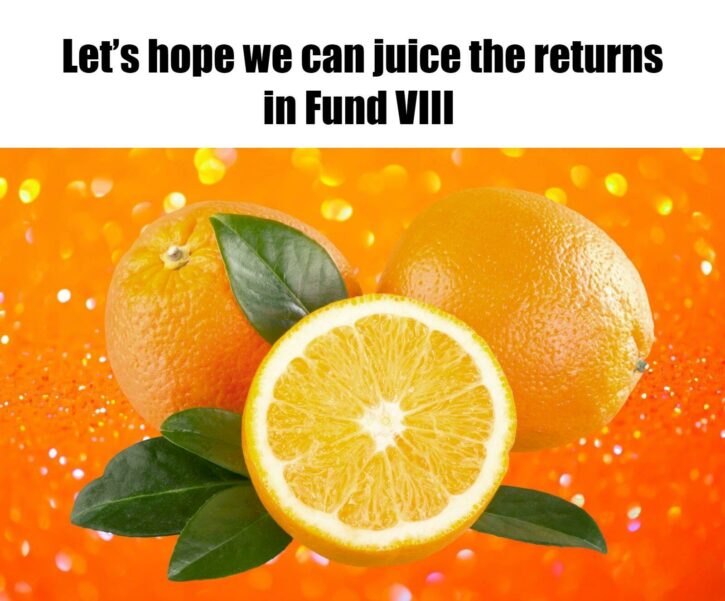
Meme - Let’s hope we can juice the returns in Fund VIII

PAI in the sky

Paris-based PE firm, PAI Partners, has squeezed out an impressive EUR7.1 billion from investors for its eighth buyout fund, exceeding its EUR7 billion target when it began fundraising at the start of last year. Investors have responded positively to PAI’s focus on acquiring businesses through complex carve-outs. The first one being Tropicana Brands, a juicy $3.3 billion deal that it acquired from PepsiCo two years ago. Existing investors account for around EUR2 billion of the assets raised…will this latest fund prove to be the eighth wonder of the world? While GPs are being squeezed on valuations – the average global buyout deal was 12.9x EBITDA last year – the new fund will allow PAI Partners to continue to seek out businesses, which, over the last decade, have come in at 11 to 11.5x on average. All in all, a pretty good PAI day for the firm.

inspired by the Wall Street Journal

Meme - Invest long and prosper

KKR’s social gathering

KKR is enjoying strong tailwinds in its drive towards advancing sustainability and social equity, with news that it has raised $2.8 billion for its second global impact fund. The first incarnation launched in 2020 with $1.3 billion. But as more investment opportunities materialize, thanks to progress in clean energy and resource recycling in supply chains, not to mention workforce evolution, KKR is successfully tapping in to investor demand. This second Global Impact Fund will aim to invest long and prosper by focusing on four investment themes to advance the United Nations’ 17 sustainable development goals: Climate Action, Sustainable Living, Lifelong Learning, and Inclusive Growth. KKR will be hoping that this latest fund will prove to be a blockbuster…more a case of ‘going with the wind’ than gone with the wind!

inspired by Reuters

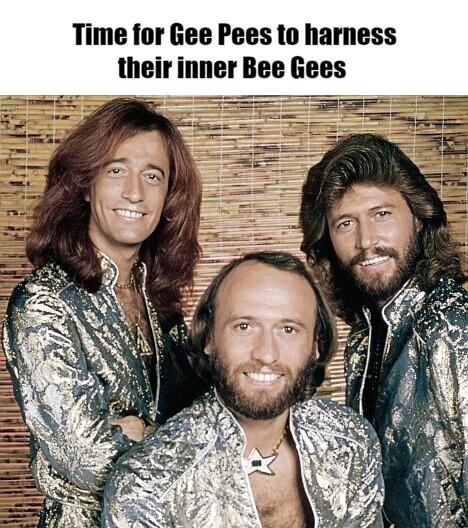
Meme - Time for Gee Pees to harness their inner Bee Gees

Staying Alive, Staying Alive

Private equity firms are having to channel their inner Bee Gee by injecting more equity into portfolio companies to ensure they are ‘staying alive, staying alive.’ Bank and private credit lenders are looking for more skin in the game from PE sponsors when it comes to refinancing and extend loans in the current high-interest rate environment. The net effect is to lower the gearing in portfolio companies; something that buyout firms have traditionally eschewed as they look to maximize the IRR of their funds. This new verse in the buyout debt musical increases sponsor risk, given the additional equity they are having to commit. Whether they will still be singing from the rooftops in years to come will depend on how effective their deal-making is, and their ability to innovate debt-to-equity commitments.

inspired by The Wall Street Journal